
Owners almost never see the crown. They see what it causes: flaking brick near the top of the stack, white crust on the face of the chimney, a damp patch in the attic beside the masonry, rust on the damper. When we follow those clues up a ladder in Tustin, the slab at the very top of the chimney is often where they lead. Then comes the real question: can it be sealed, or does it need to be poured again? Lockhart Chimney Experts answers that on the roof, and this post explains how we decide.
The job a crown does
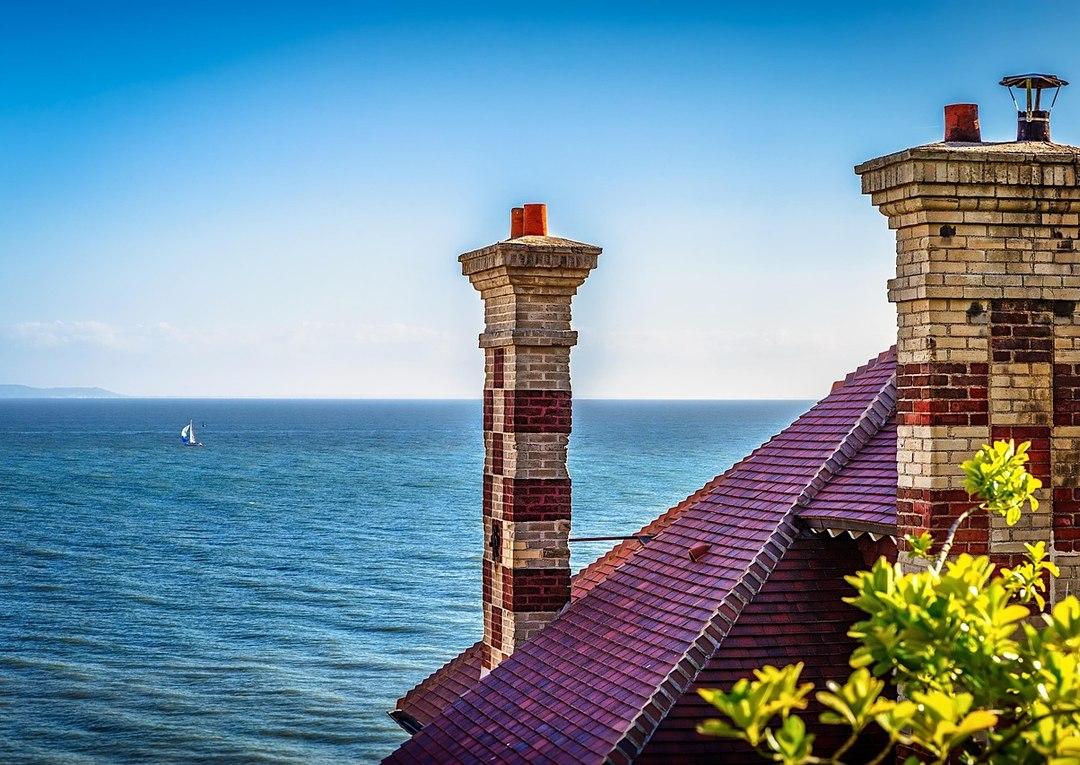
The crown is the concrete or mortar lid that closes the top of a masonry chimney between the outer brick and the flue tile. Rain lands on it first. If it is sloped, has a lip that hangs past the brick, and is in one piece, rain runs off and the brick below stays fairly dry. If it is flat, flush with the brick or cracked, water soaks in from above every storm and works its way down.
Southern California is hard on crowns in a quiet way. There is no freeze to split them overnight. Instead there are long hot summers, cool damp winters and the odd quake. The concrete shrinks and swells a little every day, and small cracks open, fill with grit and widen.
What we look for up top
On the roof we check:
- Whether the crown slopes away from the flue or sits flat or even dished.
- Whether it overhangs the brick or stops at the edge so water runs down the face.
- The width and depth of each crack, and whether any go right through.
- Whether the crown is stuck fast to the flue tile with no room for the tile to expand.
- Loose pieces, hollow sounding spots and missing corners.
- What the brick and mortar just below the crown look like, since that is where the damage shows first.
All of that goes on the written report with photos, so you can see your own crown without climbing up.
When sealing makes sense
Sealing is the smaller job. We clean the top, fill the cracks and coat the crown with a sealer made to stretch as the concrete moves. It suits a crown that:
- Is in one piece, with fine surface cracks that do not go through.
- Has a reasonable slope and some overhang.
- Sits on brick that is still firm.
Done on the right crown, sealing buys years and costs a fraction of a recast. Done on the wrong one, it is money spent painting over a problem.
When it has to be recast
A new crown means breaking off the old one and forming and pouring a fresh one. We recommend it when:
- Cracks go all the way through or pieces lift out by hand.
- The crown is flat or slopes toward the flue, so water pools.
- There is no overhang at all and the brick face below is already eroding.
- Earlier sealing has failed and the cracks have opened again.
A recast crown is shaped to shed water, with a lip that throws drips clear of the brick and a break between the concrete and the flue tile so the two can move without cracking each other. On a chimney with two flues, the form is wider and takes a little longer.
What it costs
Crown work has no printed price on this site. The cost depends on the size of the top, the number of flues, how far the cracks go and how easy the roof is to work on. We price both options in writing after we see the crown, side by side, so you can choose. If a cap is part of the fix, it is quoted on site.
If the crown has been leaking for a while, the brick below may also need repointing. That shows up as a separate line on the quote, so you can see what the crown alone would cost.
Getting the crown looked at
The things that decide the price are the condition of the slab, the size of the chimney top and whether the brick under it is still sound. To have someone check it, fill in the form on our contact page with the address and what you noticed from below: flaking brick, a damp attic, rust on the damper. We call back to set a visit, and the quote you get shows the seal option and the recast option together where both would work.
What waiting does
A sealed crack is cheap. An open crack keeps letting water in each storm. Over a couple of winters:
- The crack widens and the crown breaks into pieces.
- Water reaches the mortar joints below, which start to wash out.
- The top courses of brick loosen, and a crown job turns into masonry repair or a partial rebuild.
Water from the top also finds the flue and damper. Rust on a damper plate is often a crown or cap issue, not a damper issue.
Crown or flashing?
A stain near the chimney inside the house is often blamed on flashing. Sometimes it is the crown. Water that enters at the top can travel down inside the brick and appear right at the roofline. That is why we check the whole top of the stack before pricing any leak. Our post on flashing leaks covers that side, and crown repair and chimney waterproofing explain the work in more detail.
Crowns on framed chases
Not every chimney in Tustin has a crown. Many newer tract houses have a wood-framed chase with a metal lid on top, not masonry. If yours is stucco or siding up to the top, the part that fails is the metal cover, and our chase cover page is the one to read.
For a chimney top that has started shedding pieces or staining the brick, get in touch through our contact page and we will come take a look.
Recognize This Fault at Home?
Lockhart Chimney Experts follows the sign back to the part that failed, fixes that part and explains what a delay would cost. Crews work from Tustin across Tustin and Orange County.